
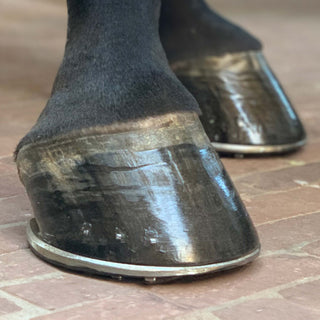
Our hoof care products include a wide range of high-quality solutions specifically formulated to optimally treat various horn and hoof issues. Since 1990, Keralit has stood for outstanding quality and reliability in horse care. Trust our years of experience and proven efficacy to support your horse's health and well-being. Discover our selection of trusted hoof care products and find the ideal solution for your horse's needs.
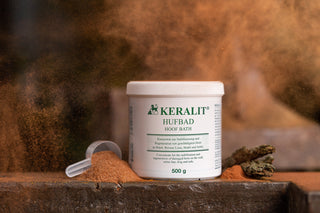
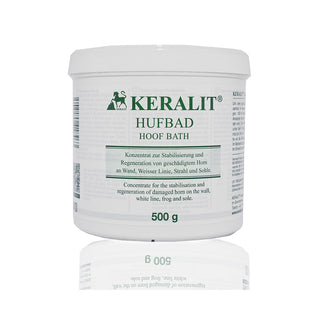
How do I recognize hoof problems?
Problems such as breakouts, rot and cracks can be easily spotted with the naked eye when scraping and inspecting the hooves on a daily basis . You can notice thrush as soon as you pick it out because of its typical smell of rotten eggs, which is difficult to get out of your nose and off your hands. Black discolored horn on the frog and white line indicates that the horn has already been decomposed by bacteria. There is an urgent need for action here!
If the horn of the frog is rather soft, this indicates a high water content. This is not a problem as long as there are no rotting processes. If the frog becomes too hard, it loses some of its damping properties. The moisture balance can vary greatly over the seasons. If you are unsure, it is best to ask your hoof trimmer or farrier. If the horn is too dry, the farrier often complains that the hoof is difficult to trim.
How often should hoof care be performed?
- For prevention, once a week is usually sufficient.
- For treating mild to moderate problems, 2 to 3 times a week.
- For more severe problems, the products can also be used daily.
Tip: None of the products show negative effects with daily use. More frequent application simply leads to success faster.
The right products for hoof care
Which hoof care products are most effective?
For decomposition processes in the Frog area
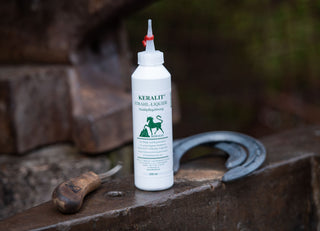
For chipping & increased wear to ensure hoof stability
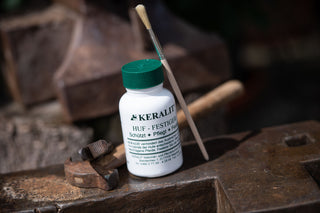
For dry & cracked hooves
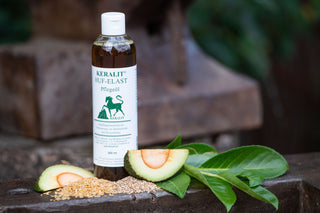
For slow growth
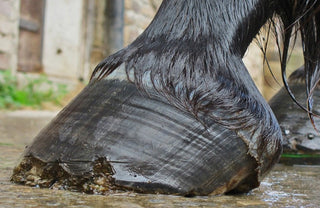
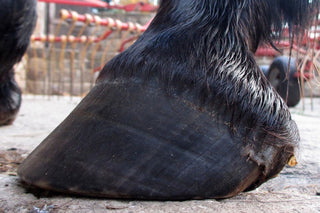
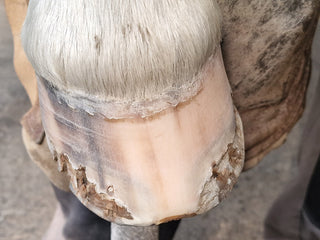
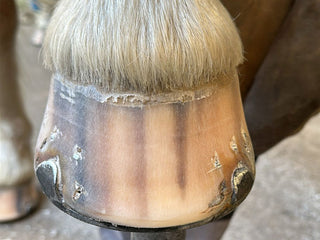
The before-and-after comparison clearly shows the effect of our hoof hardener:
Which products are necessary for basic hoof care?
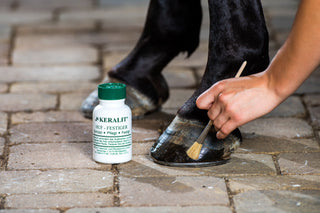
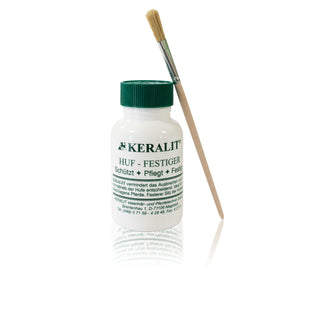
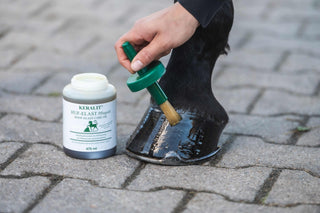
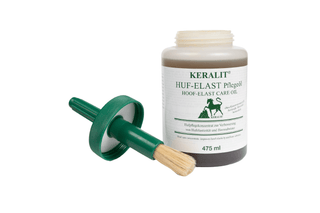
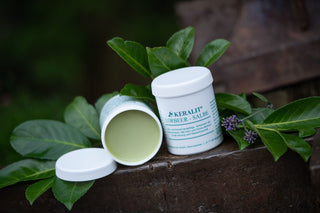
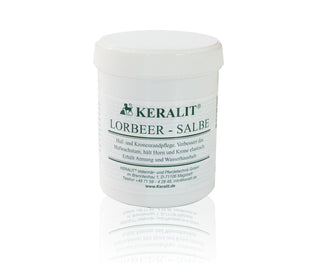
To keep a hoof healthy, it makes sense to apply Keralit Hoof Hardener once a week to prevent the hooves from chipping. Water-friendly care, such as with Keralit Hoof Elast , supports the moisture balance and counteracts drying out in summer. During the cold winter months, horn grows more slowly because the organism has to channel many nutrients, such as biotin, into coat production. In this case, a hoof ointment such as Keralit Laurel Ointment can support sufficient horn growth.
Are special hoof care products necessary for different seasons?
In dry conditions in summer, a stable weight bearing edge is very important to prevent chipping and cracking of the hoof. The following is suitable for this Keralit Hoof Hardener. To support the moisture content of the horn, a hydrophilic care product should be used, such as the Keralit Hoof-Elast should be used.
In fall and winter - i.e. when conditions tend to be damp - it is very important not to allow any decomposition processes to occur on the beam and white line. To stabilize these areas, the Keralit Hoof Hardener is ideal for stabilizing these areas. Especially in winter, there are fewer nutrients available for horn production. To improve horn growth,
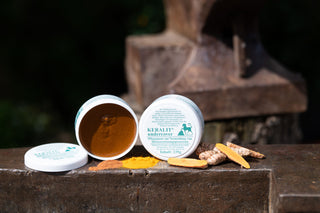
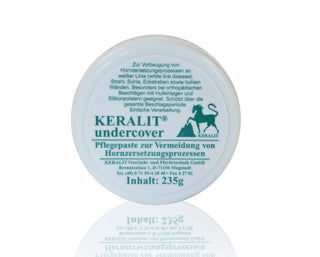
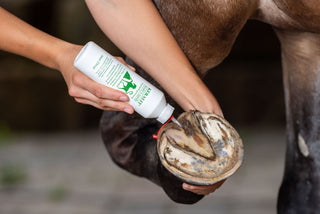
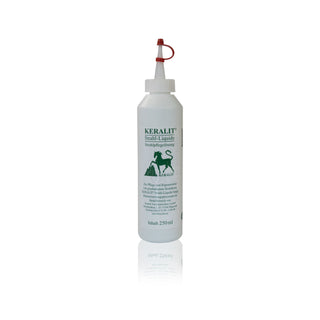
you can use the Keralit Laurel Ointment can be used. For frog protection in the event of frog decomposition Frog Liquid or the Undercover hoof care paste can be used.
Are there specific products for hoof health in cases of laminitis or other conditions?
In cases of laminitis and other disease-related hoof problems, hoof care products such as Keralit Hoof Hardener, Frog Liquid, Hoof Bath, Undercover and laurel ointment can be used in consultation with a veterinarian. Feel free to contact us here. We are happy to help!
What role does nutrition play in hoof health?
A balanced and healthy diet for the horse has a positive effect on horn growth and its quality. If there is a nutrient deficiency, it is entirely possible that horn production will suffer. This is often noticed relatively late, as the wall horn takes about a year to grow out to the weight-bearing border and poor horn quality becomes apparent. In this case, especially for a general assessment of the horse's health condition and in the event of deficiency symptoms, it is recommended to have a blood test performed by a veterinarian. A dull coat and/or brittle, itchy skin can also be signs of a nutrient deficiency.
Nutrient deficiencies that persist for only a certain period of time can often be recognized by so-called growth rings on the hoof. These are grooves and bulges caused by altered horn formation at the coronary band. Growth rings can often also be recognized after inflammations, such as laminitis, coffin joint inflammation, or the administration of medication, such as cortisone.
Essential nutrients for hoof health
Crucially important for producing sufficient high-quality horn is an adequate supply of proteins and B vitamins. Biotin is synthesized by the horse's hindgut itself. The amino acids lysine and methionine cannot be produced by the horse's body itself and must therefore be sufficiently provided through feed. The horse can produce many other amino acids required for horn growth itself through nutrients such as methionine.
Optimizing equine nutrition to promote healthy hooves
In addition to a balanced diet of forage such as hay and concentrates, providing the appropriate vitamins, minerals, and trace elements is necessary to maintain the overall health of the equine organism. Many well-known manufacturers, such as Lexa, offer the right "supplementary solution" for different horse breeds, purposes, and needs. To ensure the basic supply for the horse and its hooves, ATCOM HUF-VITAL® is highly recommended. Existing deficiencies can also be optimally corrected with it. Additional mineral feed can be omitted.
Related guides

Basic knowledge: Treating and preventing thrush in horses
Thrush is one of the most common hoof diseases in horses. This guide outlines the causes, symptoms, and how you can effectively protect and treat your horse – including practical tips for prevention.
hoof cracks in horses - causes, symptoms & treatment
Learn all about sand cracks in horses – from causes and symptoms to effective treatment options and prevention strategies. Our guide offers valuable tips for care and healing.
seedy toe in horses - causes, treatment and prognosis
Learn what a seedy toe is in horses, its causes and how you can recognize and treat it to ensure your horse's hoof health.
White line disease in horses - an overview of everything on the subject
Discover what causes White Line Disease in horses and how to recognize it. Learn the most common symptoms and get valuable tips for prevention and treatment.