
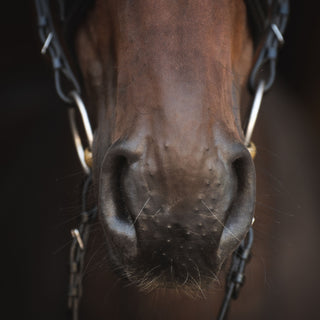

Horse grooming is an important task for every horse owner that should be carried out regularly. Daily grooming not only promotes the horse's health and well-being , but also builds a close bond between horse and human . Many horses perceive grooming and brushing as a friendly gesture, comparable to grooming between conspecifics within the herd. In addition, the horse owner gets a good feeling for the health condition of his horse and can thus recognize problems worthy of treatment, such as mallenders, wounds, colic or circulatory problems, early enough. Not only the first impression and grooming are part of horse care and health assessment, but also checking the condition of the horse before and after exercise or exercise.

What should I keep in mind during daily grooming?
In addition to grooming the horse, daily care should include checking whether the horse has sensitive or even painful areas on its body or shows signs of injury or illness. If a horse is particularly sensitive in the back area or shows chafing on the head or legs, this can indicate unsuitable equipment such as an ill-fitting saddle, a bridle that is not fastened correctly, or inappropriate boots or leg protection. The formation of white hairs often points to pressure points.
What does the horse owner need to organize?
Treatment by the veterinarian
In certain areas, such as vaccinations, dental treatment, or the administration of dewormers, the assistance of a veterinarian is necessary.
Vaccinations are an important part of preventative healthcare for horses. The three most important vaccinations include: tetanus, influenza, and equine herpesvirus.
Tetanus is a life-threatening disease for which vaccination is strongly recommended. The initial vaccination (basic immunization) is given at 6 months of age, followed by a second vaccination (4–6 weeks after the first) and a third vaccination (12–15 months after the second). Tetanus boosters should be given every 2–3 years.
Influenza (equine influenza) is aviral disease of the entire respiratory system. It is highly contagious and endangers entire herds, especially if horses are not vaccinated or not vaccinated correctly. Influenza vaccination is compulsory, especially for competition riders, and is even required twice a year (every 6 months). However, this vaccination is also recommended for all other horses, for which one vaccination per year is sufficient.
The basic immunization consists of three vaccinations. The second vaccination is given after a minimum of 28 and a maximum of 70 days after the first vaccination. The third vaccination must not be more than 6 months + 21 days after the second vaccination.
The influenza vaccination should be boosted within 6 months of the last vaccination.
Equine herpesvirus, on the other hand, is no longer a mandatory vaccination. Therefore, this decision is at the discretion of the owner or stable manager.
Regular deworming is also an important aspect of preventative healthcare for horses. It is recommended to administer dewormers 3 to 4 times a year. It is particularly important that the entire stable is dewormed together to prevent reinfection and the transmission of parasites.
There are different types of dewormers, as different parasites occur at different times of the year.
Care by the farrier
When it comes to hoof care, the owner also relies on the help of a farrier or hoof care specialist. They take care of trimming the hooves at regular intervals (every six to eight weeks). In addition, they can advise the owner on suitable hoof boots and help improve the horse's gait by trimming and shoeing the hooves.
Care by the physiotherapist and chiropractor
Physiotherapists and chiropractors also play an important role in horse care to relieve tension and blockages and maintain the horse's well-being. However, it should be noted that this type of treatment must be individually tailored to each horse.
In order to ensure optimum care and maintenance of the horse, all the points listed should be observed regularly. Keeping, feeding and exercise also play a major role in the well-being and health of the animal and should therefore also be taken into account.
What injuries need to be identified?
Injuries such as wounds or swelling that could indicate cellulitis or phlegmon should be treated immediately. To do this, it is helpful to examine the horse all over, starting with checks for insect or tick bites and wounds. These should then be disinfected and treated immediately. The horse's legs should be palpated with your hands to check for swelling and excessive warmth/heat. The hooves should also be checked for foreign objects and heat.
When it comes to horse care, the equipment required goes far beyond traditional grooming tools like curry combs and dandy brushes. Some products can significantly facilitate daily care and maintenance and should therefore not be missing from your stable first-aid kit.
What products should I use for stubborn crusts?
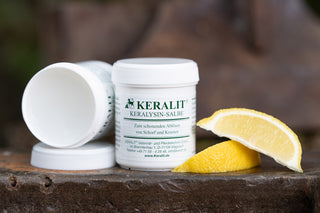
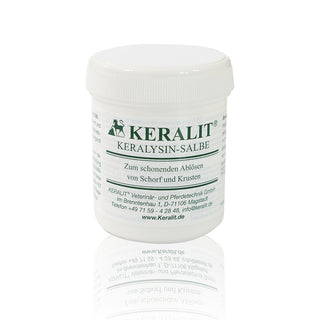
To loosen stubborn crusts, Keralysin Ointment can be helpful. This quickly and gently dissolves scabs and crusts.
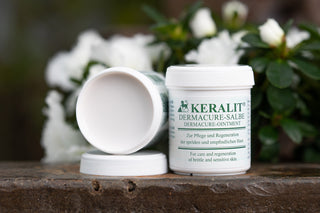
For brittle and sensitive skin, Dermacure Ointment can provide relief; it contains high-quality care substances that soothe the skin and support skin regeneration.
What should I use if the hooves start to break away?
If the hooves are badly worn or the hoof walls are breaking out, it is recommended to use the Keralit Hoof Hardener to the affected areas. This strengthens the molecular structure of the horn and can thus prevent the hooves from breaking off.
The frog looks decomposed, has deep furrows and stinks - which product is the right one?
For thrush, our frog Liquide and the Undercover can help. These two products care for the frog and protect the horn from decomposition processes. For horses kept in boxes, we recommend the Keralit Frog Liquide. Undercover has proven to be ideal for open stable horses that spend a lot of time in the wet, as it remains in the frog clefts for several days even in wet weather conditions.
How do I remove the yellowish tint from the tail and coat?
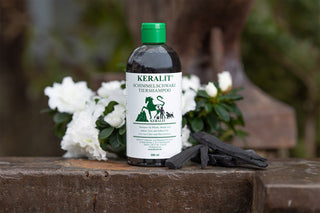
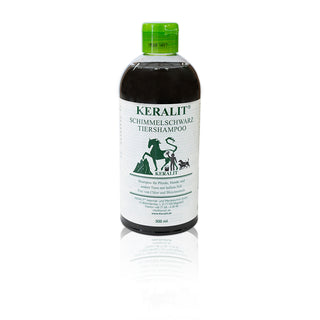
For this problem, Keralit Schimmelschwarz animal shampoo concentrate is well suited. This allows even stubborn stains, especially in light coats and tails, to be removed from both horses and dogs. And it does so entirely without irritating chlorine compounds, bleaching agents, or fragrances.

Basic knowledge of coat care – grooming horses made easy
Learn how proper coat care for horses not only improves their well-being, but also helps to prevent skin diseases. Learn the best grooming tips and techniques for a healthy coat and...

mud fever in horses - causes, symptoms & treatment
Discover everything you need to know about mud fever in horses: causes, symptoms and how you can prevent it developing and treat affected areas of skin with the right care. Ensure healthy skin in...