

Proper nutrition is fundamental to your horse's health and performance. High-quality horse feed forms the basis for strong hooves, a glossy coat, and a vital immune system. Our horse feed products offer a targeted selection of high-quality nutrients specifically chosen to optimally support your horse's health and well-being. With our long-standing expertise we help you find the ideal dietary supplement for your horse. Discover our three carefully formulated products and choose the perfect solution for your horse's individual needs.


Why is equine digestion and the right feed so important?
Originally, horses are steppe animals that spend up to 16 hours a day foraging to meet their nutritional needs. To find enough food on the steppe, ancestral wild horses roamed large areas of land. Constant movement and slow feed intake are particularly beneficial for the gastrointestinal tract and stimulate intestinal motility. Today, our task is to design feeding management so that it is optimally adapted to the horses' needs and improper feeding is avoided.
Feed for high-quality equine nutrition
Herbal complementary feed for muscle building and maintenance
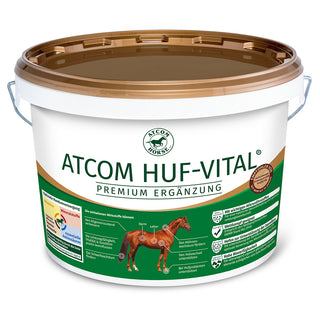
High-quality all-around care for healthy hooves
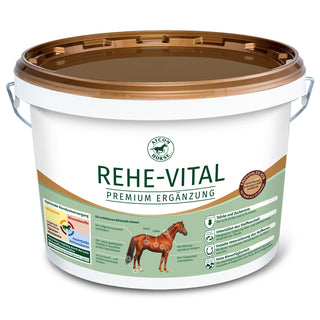
High-quality all-around care for horses prone to laminitis and metabolic issues
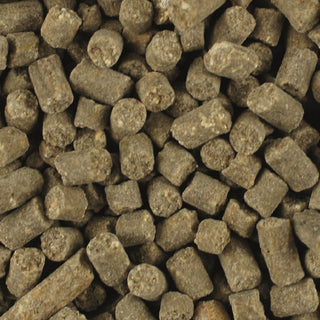
Our Keralit Muskular provides a sugar-free source of energy. In addition to rice bran oil and gamma-oryzanol for muscle building, it contains extra vitamin C, which further promotes the horse's vitality. Keralit Muskular is ideally suited for horses, ponies, and dogs. It supports animals with increased energy requirements, such as sport horses, broodmares and stallions, as well as older and weakened animals.
For slowly growing or poor-quality horn material, ATCOM HUF-VITAL® is recommended as a compensation.
For laminitis or horses and ponies at risk of laminitis, ATCOM REHE-VITAL® is recommended. This feed provides a precisely tailored supply of minerals and vitamins to optimally support the organism.
Hay before concentrates
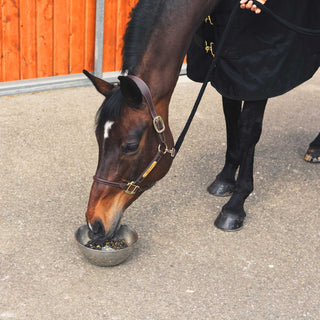
Hay forms the basis of any species-appropriate
horse feeding and should always be given before concentrate feed. As the most important roughage, hay provides the necessary crude fibers for healthy bowel function. The rule of thumb is: at least 1.5 kg of hay per 100 kg of body weight daily.
You can recognize high-quality hay by its greenish color and aromatic scent. It should be stored dry and be free of mold. Crucial for good stomach health is that the horse has been able to eat hay for at least half an hour before being fed concentrate. The saliva produced during chewing makes the concentrate feed much more digestible. Rule: No concentrate feed on an empty stomach!
Concentrated feed
The amount and frequency of concentrate feeding depend on how much concentrate a horse needs. If you only want to supplement a small amount, a single feeding is sometimes completely sufficient. Larger amounts should be divided into multiple portions (e.g., 3 times daily) to avoid overloading the stomach.
In general, however, horses should be fed together in a stable environment, as separate feeding inevitably leads to restlessness and food envy. If an intolerance or allergy exists, or if the horse is not allowed to consume grain for health reasons such as laminitis or stomach issues, the feed market offers numerous alternatives for grain-free feed. This ensures no horse has to miss out during concentrate feeding.
Mineral feed
Mineral feed compensates for nutritional gaps that can arise from basic feeding. Minerals such as calcium, phosphorus, magnesium, and trace elements like zinc, copper, and selenium are particularly important.
In addition to daily roughage and concentrate feeding, attention should be paid to a balanced vitamin and mineral supply. Providing high-quality mineral feed and vitamins is especially important for horses that receive oats as their sole concentrate. Oats are high in phosphorus. This is generally not harmful to the horse as long as sufficient calcium is provided via the mineral feed.
If an imbalance occurs here, the horse's body cannot absorb sufficient calcium. For pre-mineralized concentrate feeds, the additional administration of mineral feed can be omitted as long as the horse receives the prescribed amount. If the horse receives little of the already mineralized feed, an additional mineral feed makes sense.
Zinc, biotin, and sulfur-containing amino acids are especially important for hoof health. A deficiency in these nutrients can lead to poor horn quality, slow hoof growth, and an increased susceptibility to hoof diseases. High-quality mineral feed should be dosed according to requirements – an oversupply can be just as harmful as a deficiency.
Roughage
In addition to hay, haylage, straw, and silage are also considered roughage. These feeds are essential for keeping the horse occupied and for the function of the digestive tract. Roughage should be offered ad libitum, meaning freely available.
Haylage is particularly suitable for horses with respiratory problems because it is less dusty than hay. However, once opened, it must be fed promptly to prevent mold growth. Straw can serve as a supplement, but should not be the main source of roughage.
Supplementary feed
Supplementary feed comprises special additives for specific requirements. This includes preparations to support hoof health, skin and coat, the musculoskeletal system, or the immune system. In the case of hoof problems, targeted dietary supplements with biotin, methionine, and zinc can support regeneration. However, you should note that supplementary feed cannot replace the basic diet, but merely complements it. The effect only becomes apparent after several months of consistent feeding, as the hoof consists of "dead cellular material" and damaged areas must first grow out.
What does not belong in horse feed?
Certain foods and feeds are unsuitable or even dangerous for horses:
Toxic and incompatible feeds:
- Lawn clippings: Can lead to gas colic and poisoning
- Bread and baked goods: Swell up in the stomach and can
cause blockages - Stone fruit (cherries, plums): Stones contain hydrocyanic acid
- Cruciferous vegetables (cabbage, broccoli): Cause flatulence
- Nightshades (tomatoes, potatoes): Contain toxic
solanine - Avocado: Highly toxic to horses
- Chocolate: Theobromine is toxic
Caution is also advised with pasture plants. Tansy ragwort, autumn crocus, yew, and bracken are highly toxic and can be fatal even in small quantities.
How do I find the right horse feed for my horse?
First and foremost, it is important to pay attention to the physical performance your horse needs to deliver. A sport or breeding horse has a significantly higher energy requirement than a leisure horse that does light work two to three times a week. Many feed manufacturers offer pre-mineralized feeds suited to each performance level and type of work. Be sure to follow the feeding recommendations so that the horse receives the appropriate amount. In addition, the breed, age, and health status also determine the quantity and type of feed the horse requires. If you are unsure what is right for your own horse, you can obtain free feed consultations from the respective manufacturer experts.
Choosing the optimal horse feed depends on various factors.
Individual factors:
- Age and stage of development
- Breed and conformation
- Use and training intensity
- State of health
- Keeping conditions
- Season
A warmblood competing in sports has different requirements than a Shetland pony kept for
repleasure riding. Older horses often need more easily digestible feed, while young horses require specific nutrients for growth and development.
Practical approach:
- Determine your horse's ideal weight
- Consider breed-specific differences in metabolism as well as energy and nutrient requirements
- Assess the workload realistically
- Have a ration calculation prepared if you are unsure
- Implement feed transitions gradually over 10-14 days
- Monitor your horse for changes
How can the right horse feed help with health issues?
When a horse has a health issue, alongside visiting the veterinarian, you also want to support its recovery through nutrition as best as possible. There are countless types of horse feed and supplements on the market that promise to keep the horse healthy. It is often uncertain which supplement is the right one.
In general, correct feeding of roughage, concentrates, and minerals is the foundation for a healthy horse. If health problems arise, it is always sensible to have a blood test performed to identify any potential deficiency in vitamins or trace elements and correct it with an appropriate supplement.
Hidden sugar – watch out!
Choosing the right concentrated feed is a topic that often receives too little attention. Many musues, pellets, and treats contain high levels of molasses, which over time harms the horse's digestive tract and teeth. It is important to check the ingredient declarations before making a purchase.
Since sugar is hidden in many feedstuffs, it can be particularly problematic for horses with sensitive metabolisms. Pay attention to the labeling when buying horse feed:
Sugar sources in feedstuffs:
- Molasses (up to 50% sugar)
- Beet pulp (if not molasses-free)
- Cereals (starch is broken down into sugar)
- Apples and carrots (natural fruit sugar)
- Treats and muslis (sugar often present in the form of molasses)
For horses with laminitis, EMS, or Cushing's, the total sugar content (sugar + starch) should be below 10% of the dry matter. Opt for grain-free alternatives and look for terms like "molasses-free" or "reduced sugar".
Turnout on grass
Spring is here and you would love to let your horse out to pasture all day long. However, there is a great danger here. The gastrointestinal tract first has to get used to the fresh grass, as the horse has not eaten grass all winter. In addition, young grass is particularly high in fructan. This sugar can quickly lead to metabolic diseases such as laminitis , especially in sensitive horse breeds. Ponies, cold-blooded horses and horses that come from countries with rather barren landscapes are particularly sensitive to this.
Particularly in spring during the early morning hours, pasture grass contains the highest amount of fructan. Over the course of the day, the fructan content slowly decreases again. Therefore, it is advisable to schedule the initial turnout for midday or afternoon. To ensure that your horse is gently accustomed to grazing, you should introduce pasture time slowly.
Properly introducing pasture turnout:
- Start with 10-15 minutes daily
- Increase pasture time gradually over 3-4 weeks by approx. 10 minutes every 2 days
- Ideally, introduce grazing in the afternoon when the fructan content is lower
- Avoid pasture turnout after frost or during intense sunlight
- Monitor your horse for signs of discomfort
Particularly vulnerable horses (laminitis patients, EMS, overweight animals) should only be turned out onto pasture in a controlled manner or while wearing a grazing muzzle.