

Proper nutrition is essential for your horse’s health and performance. High-quality horse feed is the foundation for strong hooves, a shiny coat, and a robust immune system. Our horse feed products offer a targeted selection of high-quality ingredients that have been specially chosen to optimally support your horse’s health and well-being. With our many years of expertise , we help you find the ideal feed supplement for your horse. Discover our three carefully formulated products and choose the perfect solution for your horse’s individual needs.


Why is the digestion of horses and the right feed so important?
Originally, the horse is a steppe animal that spends up to 16 hours a day covering its food requirements. In order to find enough food in the steppe, the original wild horses roamed large areas of land. The constant movement and slow feed intake are particularly digestible for the gastrointestinal tract and mobilize the intestinal motor system. Nowadays, it is our job to feed the horses in such a way that it is as well adapted to their needs as possible and incorrect feeding is avoided.
Feed for high-quality nutrition for horses
Herbal feed supplement for muscle building and maintenance
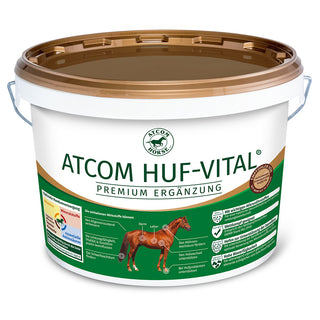
High-quality all-round care for healthy hooves
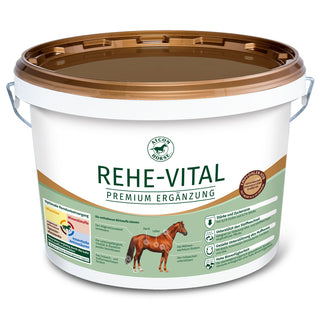
High-quality all-round care for horses sensitive to laminitis and metabolism
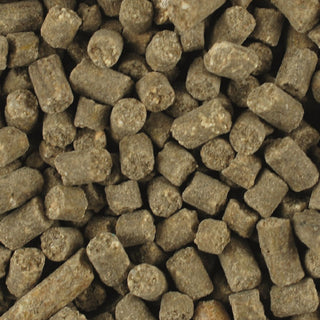
Our Keralit® offers a sugar-free source of energy. Keralit Muskular. In addition to rice germ oil and gamma oryzanol for muscle building, it contains additional vitamin C, which further promotes the horse's vitality. Keralit Muskular ideal for horses, ponies, and dogs. It supports animals with increased energy requirements, such as sport horses, broodmares, and stallions, as well as older and weakened animals.
For slow-growing or
poor-quality horn material, we recommend using ATCOM HUF-VITAL®.
ATCOM REHE-VITAL is recommended for horses and ponies with laminitis or at risk of laminitis. The feed offers a precisely tailored supply of minerals and vitamins to provide optimum support for the body.
Hay before the concentrated feed
Hay forms the basis of any species-appropriate
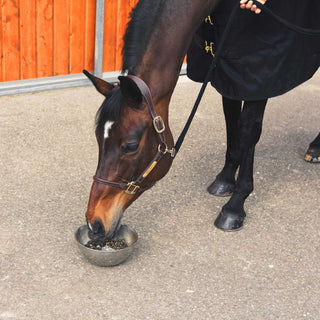
horse feeding regimen and should always be fed before concentrated feed. As the most important roughage, hay provides the raw fiber necessary for healthy intestinal function. The rule of thumb is: at least 1.5 kg of hay per 100 kg of body weight daily.
You can recognize high-quality hay by its greenish color and aromatic scent. It should be stored in a dry place and be free of mold. For good digestive health, it is essential that the horse has had at least half an hour to eat hay before being fed concentrate. The saliva produced during chewing makes the concentrate much easier to digest. Rule: No concentrated feed on an empty stomach!
Concentrated feed
The amount and frequency of concentrate feeding depends on how much concentrate a horse needs. If you want to feed your horse a small amount, one feeding is sufficient. Larger quantities should be divided into several portions (e.g. 3 times a day) so that the stomach is not overloaded.
In general, however, horses in the same stable should be fed together, as otherwise this will inevitably lead to unrest and food envy. If there is an intolerance or allergy or the horse is not allowed to eat grain for health reasons such as laminitis or stomach problems, the feed market offers numerous grain-free feed alternatives. This means that no horse has to go without concentrated feed.
Mineral feed
Mineral supplements help fill nutritional gaps that may arise from the main diet. Minerals such as calcium, phosphorus, and magnesium, as well as trace elements like zinc, copper, and selenium, are particularly important.
In addition to the daily roughage and concentrate feed, care should be taken to ensure a balanced supply of vitamins and minerals. It is particularly important to give high-quality mineral feed and vitamins to horses that are only fed oats as concentrated feed. Oats contain a lot of phosphorus. This is not primarily harmful to the horse as long as sufficient calcium is provided via the mineral feed.
If there is an imbalance here, the horse's body cannot absorb enough calcium. If the horse is already being fed mineralized concentrates, there is no need to give it additional mineral feed as long as it receives the prescribed amount. If the horse receives little of the already mineralized feed, additional mineral feed makes sense.
Zinc, biotin, and sulfur-containing amino acids are particularly important for hoof health. A deficiency in these nutrients can lead to poor horn quality, slow hoof growth, and increased susceptibility to hoof diseases. High-quality mineral supplements should be administered in doses appropriate to the horse’s needs—an excess can be just as harmful as a deficiency.
Roughage
In addition to hay, roughage also includes haylage, straw, and silage. These feeds are essential for keeping the horse active and ensuring proper digestive function. Roughage should be offered ad libitum, meaning it should be available at all times.
Haylage is particularly suitable for horses with respiratory problems, as it contains less dust than hay. However, it must be fed promptly after opening to prevent mold growth. Straw can be used as a supplement, but should not be the primary source of roughage.
Supplementary feed
Supplemental feed includes special additives designed to meet specific needs. These include products that support hoof health, skin and coat, the musculoskeletal system, or the immune system. In cases of hoof problems, targeted supplements containing biotin, methionine, and zinc can aid in regeneration. However, please note that supplemental feed cannot replace the basic diet; it merely supplements it. The effects only become apparent after several months of consistent feeding, as the hoof consists of “dead cell material” and damaged areas must first grow out.
What shouldn't be included in horse feed?
Certain foods and feed are unsuitable or even dangerous for horses:
Toxic and unsuitable feed:
- Lawn clippings: Can cause gas colic and poisoning
- Bread and baked goods: They expand in the stomach and can cause constipation
- Stone fruits (cherries, plums): The pits contain hydrocyanic acid
- Cruciferous vegetables (cabbage, broccoli): Cause bloating
- Nightshade plants (tomatoes, potatoes): Contain the toxic alkaloid solanine (
) - Avocado: Highly toxic to horses
- Chocolate: Theobromine is toxic
Caution is also advised when it comes to pasture plants. Ragwort, autumn crocus, yew, and eagle fern are highly toxic and can be fatal even in small quantities.
How do I find the right horse feed for my horse?
First and foremost, it is important to pay attention to the physical performance you want your horse to achieve. A sport or breeding horse has a much higher energy requirement than a leisure horse that does light work two or three times a week. Many feed manufacturers offer suitable, already mineralized feed for every performance level and type of work. It is important to follow the feeding recommendations so that the horse consumes the right amount. In addition, the breed, age and health condition also determine the amount and type of feed the horse needs. If you are unsure what is right for your horse, you can obtain free feed advice from the manufacturer's experts.
Choosing the best horse feed depends on various factors.
Individual factors:
- Age and stage of development
- Race and physique
- Usage and Training Intensity
- Health status
- Housing conditions
- season
A warmblood in competitive riding has different needs than a Shetland pony kept as a hobby horse
. Older horses often require feed that is easier to digest, while young horses need specific nutrients for growth and development.
Practical procedure:
- Determine your horse's ideal weight
- Take into account breed-specific differences in metabolism as well as in energy and nutrient requirements
- Assess the workload realistically
- If you're unsure, have us calculate the ration for you
- Make dietary changes gradually over a period of 10–14 days
- Watch your horse for any changes
How can the right horse feed help with health problems?
If you have a horse with a health problem, you want to strengthen it as much as possible by feeding it as well as visiting the vet. There are countless types of horse feed and feed supplements on the market that promise to keep your horse healthy. People are often unsure which feed supplement is the right one.
In general, the correct feeding of roughage and minerals is the basic building block for a healthy horse . If health problems arise, it is always advisable to have a blood count carried out to identify any vitamin or trace element deficiencies, which can then be compensated for with a suitable feed supplement.
Hidden sugar - keep your eyes open!
The right choice of concentrated feed is an issue that is often given too little attention. Many mueslis, pellets and treats contain a lot of molasses, which is harmful to the horse's digestive tract and teeth in the long term. It is important to check the declaration of ingredients before buying.
Since sugar is often hidden in many horse feeds, this can be particularly problematic for horses with sensitive metabolisms. When buying horse feed, pay attention to the ingredient list:
Sources of sugar in animal feed:
- Molasses (up to 50% sugar)
- Beet pulp (unless molasses-free)
- Grains (starch is broken down into sugar)
- Apples and carrots (natural fruit sugar)
- Treats and muesli (often containing sugar in the form of molasses)
For horses with laminitis, EMS, or Cushing's disease, the total sugar content (sugar + starch) should be less than 10% of the dry matter. Choose grain-free alternatives and look for labels that say "molasses-free" or "reduced sugar."
Grazing grass
Spring is here and you would love to let your horse out to pasture all day long. However, there is a great danger here. The gastrointestinal tract first has to get used to the fresh grass, as the horse has not eaten grass all winter. In addition, young grass is particularly high in fructan. This sugar can quickly lead to metabolic diseases such as laminitis , especially in sensitive horse breeds. Ponies, cold-blooded horses and horses that come from countries with rather barren landscapes are particularly sensitive to this.
Pasture grass contains the highest levels of fructan in the early morning hours, especially in the spring. As the day progresses, the fructan content gradually decreases. Therefore, it makes sense to schedule grazing for midday or the afternoon. To ensure that your horse is gently acclimated to grazing, you should introduce it to the pasture gradually.
Proper Grazing:
- Start with 10–15 minutes a day
- Gradually increase the time spent grazing over 3–4 weeks, adding about 10 minutes every other day
- Ideally, graze in the afternoon when the fructan content is lower
- Avoid letting the animals graze after a frost or in strong sunlight
- Watch your horse for signs of discomfort
Horses at particularly high risk (those with laminitis, EMS, or obesity) should only be turned out to pasture under supervision or while wearing a muzzle.